Summary
The first week of January isn’t just “back to school" - it’s one of the most effective behaviour intervention points of the entire year. In this episode, we explore how to harness the psychology of the Fresh Start Effect to reset classroom routines, rebuild relationships and help pupils begin the new term with confidence rather than shame.
You’ll discover:
- Why January works better than September for behaviour resets.
- How to create whole-class “New Year resolutions" that shift identity, not just rules.
- A powerful symbolic activity to help individual pupils let go of last term’s mistakes.
- How to rebuild safety and trust with pupils who struggled in the autumn.
- Practical ways to re-teach routines, reduce sensory overload and reset the emotional climate.
- How January can lower PAIN-driven stress and improve SEMH outcomes across the class.
Whether you’re a teacher, SENCO or school leader, this episode gives you a clear, needs-led roadmap for starting the term calmer and more connected - so your pupils can thrive from day one.
Perfect for any school looking to make January feel like a true fresh start, not “September, part two."
Important links:
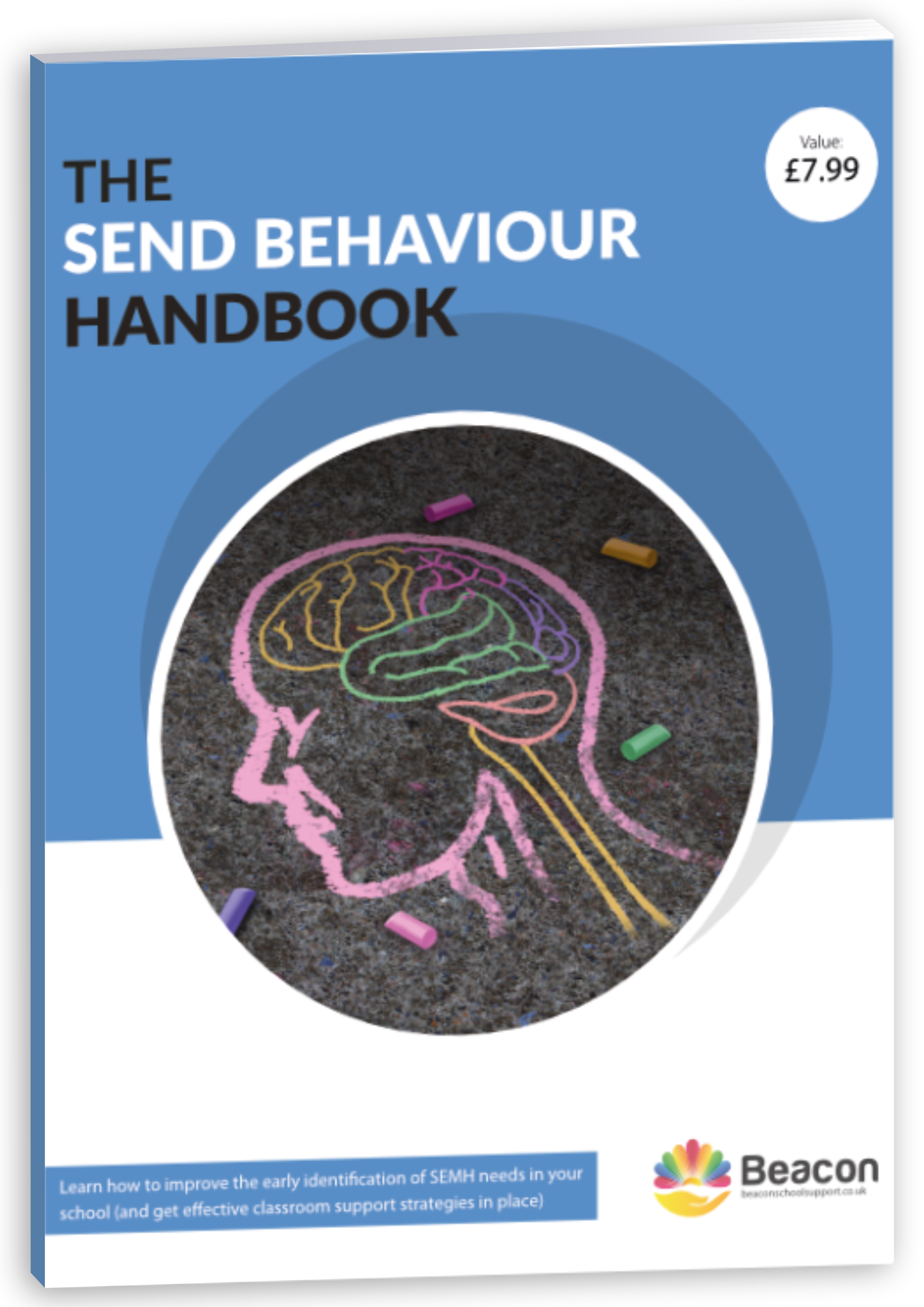
Get our FREE SEND Behaviour Handbook: https://beaconschoolsupport.co.uk/send-handbook
Download other FREE behaviour resources for use in school: https://beaconschoolsupport.co.uk/resources
Share this podcast with your friends:
Show notes / transcription
Simon Currigan
If you want to start January with calmer behaviour, clearer routines and pupils who actually feel ready to learn again, this episode will show you how to use the Fresh Start Effect to reset your classroom culture in a way that genuinely sticks. My name's Simon Currigan and for over 18 years I've helped hundreds of schools support pupils with SEMH needs, rebuild behaviour after tough terms and create classrooms where children feel safe, regulated and ready to succeed. And today I'm going to show you how to make January one of the most powerful behaviour intervention points of the entire school year. You're going to learn to use whole class identity shifts to change behaviour without confrontation, how to help individual pupils let go of last term's mistakes so they can actually move forward and how to rebuild trust and safety so your routines fit faster and with less friction than they did in December and November. If you want January to feel like a fresh start rather than September Part 2, keep listening. This one's going to change the way that you use the start of the year as an SEMH and behaviour tool forever. Hi there.
Welcome to School Behaviour Secrets. My name's Simon Currigan and I'm the kind of man who hangs a glittery Tyrannosaurus Rex from the top of his Christmas tree. Because nothing says Christmas like, you know, ROAR! This is the podcast where we get curious about what's really driving behaviour in schools and how you can make a genuine difference for your pupils, especially the ones with social, emotional, and mental health needs. But before we get started, can I ask you a quick favour? If you're finding these episodes helpful, please subscribe to the podcast so you never miss a future episode. And if you've got a moment, I'd be really grateful if you could leave a quick review on Apple Podcasts or Spotify.
It tells the algorithm to share the show with other podcast listeners and really helps us find new audiences. And remember, if you find today's episode useful also just in the real world, please recommend the episode to a colleague or two because the more people who use these strategies, the calmer and happier their classrooms become. Good for them and good for their students. Okay, let's get into today's episode because this is our last episode as I record this before Christmas. In schools, it's the time of year where we plough on towards the end of term through productions and parties our bodies powered by nothing but sheer determination and a blood sugar count fortified by chocolate's Christmas cheer and Lemsips. But Christmas isn't what I want to talk about today it's actually the New Year and we're going to talk about something that can transform behaviour in schools which is January and the power of a fresh start. And if you're listening to this on repeat in the future don't skip this episode because there's something to bear in mind here that's actually really useful for you wherever you are in the year.
We're really lucky actually because schools are full of natural reset points. We have a new academic year, a new calendar year, a new term, a new half term, a new week. For pupils with SEMH needs especially, those reset points are all golden opportunities - genuine permission to wipe the slate clean, to lower shame, to let go of the past, and to start again. So even though the next reset point for you might not be January, there's going to be something useful in this episode for you today. But that said, January in particular is one of the most powerful reset moments you will ever get. Why? Because it combines several big psychological triggers all at once.
A new term, a new calendar year, a new chapter after the sensory and emotional chaos of Christmas and December. We already know from science, from behavioural science, there's something called the Fresh Start Effect. And that's where landmarks in time help change how we think about ourselves. So basically what that effect tells us is when the calendar changes to a new year, people feel more open to change. It's like people are programmed to think about that - getting out a new calendar exactly like that. Adults feel it when they sign up for a new gym or a new diet or whatever in January. Now, whether they sustain.
that change is a completely different matter. And when we think about sustaining behaviour change with kids, well, that's a whole new episode. But there's no doubt that the change in year from 2025 to 2026 or whatever year you're listening to this is a great spark for change and for hope. So let's not waste that because kids feel it too. In classrooms, this means January is a golden window for reestablishing routines, rebuilding how safe kids feel in the classroom, and really moving class culture. And unlike September when the kids are walking into the classroom for the first time, everything's new, you're new, everything's overwhelming, January has a secret advantage. Your pupils already know your expectations.
They know your routines. You're not having to teach anything from scratch. Effectively, what we're going to do is we're going to tighten up what's slipped. And in all honesty, your kids, well, they're going to expect some of that, which means they're less likely to push back in January because the whole world is talking about fresh starts. It's kind of baked into their assumptions that change is coming. That's why in schools, January behaviour resets actually often stick better than September ones. You can use the springboard for behaviour change that lasts for the rest of the year.
So don't waste this opportunity. Use the one that's coming up intentionally to make a real difference in your classroom. So first question is obviously, how do we make the most of this fresh start moment? I'm going to divide this episode into two. We're going to start with whole class behaviour and then we're going to move on to individual pupils. So with whole class behaviour, this really is the perfect time of the year to set what I call a whole class New Year's resolution. So not for individuals, for the group, something that the whole class can focus on together that improves the shared learning environment.
And crucially, that builds on our shared identity as a class. With the whole group pulling together towards a common goal. So what will that goal be? Well, it's going to be individual to the students that you teach. You might choose something like getting better at taking turns or remembering to put hands up or how they line up calmly and quietly or reducing transition noise or improving how your pupils talk to each other, whether that's group work or when they have a disagreement. The key here is that it's individual to the kids that you're teaching and to make make that change something observable, something if you put a camera in the corner of the room, something you could actually see and hear, a bit like you would if you were setting a target for an individual IEP. So it's going to be something that's super specific.
So a whole class target of being kind, well that's too vague because being kind can mean lots of different things. Waiting your turn before speaking is much more concrete, it's observable, and actually it's also measurable. So you could keep track of how the class are doing. And here's the key - don't wait until January to introduce your whole class resolution. If you talk about it when the kids come back in January, then you're going to have to give them some time to process it and work on what you're doing to, you know, those concrete behaviours. And when you do that, well, you're doing the work on the wrong side of the starting line. A sprinter does his preparation before the starting gun is fired, and we need to be the same.
So in December, now is the time to be priming the class before they leave for the holidays so that they are ready to start implementing that whole class resolution when they come back after Christmas. So we want to ask them questions now like, if our class could improve just one thing in the new year, what would make the biggest difference to everyone? What would help our classroom feel calmer? What would help us get more learning done? What do we want to be known for as a group in this school in 2026? And then have some whole class discussion, let them talk, let them Discuss. Give them ownership.
Let them have a vote if you want. I mean, obviously guide that conversation and guide that vote because they could end up saying literally anything. But if you guide them through that process and they feel they have some ownership, they feel like they chose the resolution, they're going to be more emotionally invested in following it. And most importantly, you've pre-framed now what happens after the holiday. They come back in January, expecting to work towards the whole class resolution. They're ready to hit the ground running. You're not kind of springing anything on them in day one.
You've prepared them for it. Then when you start the new term, you link this behaviour change to their identity as a group. You say something like, this term, remember we're becoming the best class in school at and then whatever the behaviour was, wait in our turn, helping classmates who are stuck with their work, whatever it was. Or this term we're becoming the class that moves around school calmly like ninjas. This term we're becoming the class that genuinely listens when other pupils speak. Identity beats rules every time. Don't just talk about the change as well.
Post it somewhere visible with reminders where they can't miss it. So print out a massive reminder above the interactive whiteboard or a sign on the door or on a window. Whatever's going to hit their eyeline when they're in the room. Then during week one reinforce it daily. Celebrate tiny wins. Change remember is about progress. It's about achieving perfection on day one.
And it's amazing how with a big focus for just one or two weeks you can really see the change in your classroom enough for other adults to come into the room look at your kids and actually comment on. So that's whole classes and whole class resolutions. Now let's look at how we can use the new year to support individuals who struggled emotionally in the autumn term. Many of these pupils carry around some shame with them actually from September through to December. Often a lot of shame shame.
Over small things. That argument they had, the meltdown they regret, the fallout with their friends, the way they spoke to you disrespectfully. Of course, not that they'd ever admit that. And shame is tricky because shame is something we attach to our identity. It convinces us this is the kind of person we are.
We're bad people. We deserve that shame.
So change isn't possible. For those of you coming to this for the first time, that's the difference between shame and guilt, by the way. Guilt is doing something wrong and feeling bad about that specific action that you took. Shame is when you kind of take that action and exaggerate it and extrapolate it and say, because I did that bad thing, that makes me a bad person. There's an extra step in there. Guilt is actually helpful. It stops us doing bad things because we'll know we'll feel bad about them.
It's kind of a social glue that binds society together. But guilt, well, it comes and goes. It's focused on individual actions, and it can be dealt with through apologies and restorative conversations and putting things right. Shame, on the other hand, it's poisonous because it's about us as individuals. Shame doesn't let go. It's hard to shed the identity of a bad person once you're carrying that around with you. It convinces people, especially kids, that change just isn't possible.
So we need a mechanism to help them let go of that. And many cultures around the world use symbolic release rituals, moments where you write things down that you want to leave behind, and then you cast them away. So traditionally, that might involve water or fire. But since most head teachers frown on letting kids play with fire, and I don't need more angry emails about damage to school property as a result of following my strategies, I'm going to modify that idea slightly. So this is how it might work. Just before the Christmas break, or in the first week back in January, you give your pupil a small slip of paper and you ask them to write down one thing they want to leave behind from last term. So it might be getting overwhelmed in maths and shouting at the teacher, falling out with my friends, not keeping trying when things get hard, shouting out all the time, feeling angry all the time, whatever they think is appropriate and you tell them that they don't have to share it with you unless they really want to.
They can keep it private and then after they've written on their piece of paper you create a symbolic release moment. So in traditional rituals that might be actually taking the piece of paper and throwing it in a fire but in school that might be throwing it in a pretend campfire using red and orange tissue paper or you can screw it up or rip it up and drop it into into the bin. Or if you do have safe water on site, they can literally go and throw it into the water and watch it wash away. Again, I'm taking no responsibility for dead fish as the result of using toxic pens in school. But there is actually another nice modern twist you can use, which is to let them put their paper through a paper shredder, which, let's face it, is incredibly therapeutic at the best of times. So the message is simple. You get to choose what you carry forward and what you let go.
That simple act of closure helps their nervous system reset. It tells the child, your past behaviour isn't your identity. The things you did, they were just actions that we're now letting go of. And after that, you replace it with a future identity statement. Something like this term, you're becoming someone who gives things a go. This term, you're becoming someone who does ask for help when they. This term you're becoming someone who uses strategies to stay calmer for longer.
This term you're becoming someone who tries again tomorrow even if things went wrong today. It's gentle, it's hopeful and it's deeply regulating for pupils with SEMH needs who do struggle with shame. And speaking of underlying needs, January is also a great moment to take a fresh look at pupils whose behaviour last term didn't quite make sense to you. Or I'm sorry, that was like the worst link in the world. But if you do want to make sense of the pupils that you teach and you want a helpful tool to help you understand their behaviour, you will want to grab a copy of our free SEND behaviour handbook. It's packed with short, easy to read guides on conditions like ADHD, autism, trauma and anxiety, along with a behaviour analysis grid that helps you link classroom behaviours to possible underlying needs so you can respond proactively rather than stay stuck firefighting. Its purpose isn't to turn school teachers into doctors or paediatricians.
It's there to help us as educators think deeply about what drives the behaviours we see in the classroom and to help get early strategies in place because we know early intervention really helps students progress and it enables us to start talking to the right professionals as early as possible. Lots of teachers and school leaders have been printing it out for staff rooms or induction packs and you can get your free copy at co. uk/send-handbook. That's beaconschoolsupport. co. uk/send-handbook. Or I'll put that link in the show notes so you can click straight through.
Okay, let's move on to another powerful January reset strategy. And that's one of resetting relationships. And here I'm going to focus actually on adult pupil relationships because it's especially useful to us, the adults, to reset relationships with pupils where things Maybe they went wrong over the previous term. Maybe the relationship soured. As adults, it's in our self-interest to take responsibility for initiating that, for repairing and rebooting the relationship, because it actually makes our job in the classroom easier. So let's get on the front foot. Let's give our pupils the fresh start they need to make our lives better.
So when you see them for the first time, a simple, I'm glad you're back at the door delivered genuinely, not sarcastically. Starts the process off. It helps the pupils regulate when they walk into the room after the Christmas break. A short check-in with a pupil who's been struggling says whatever happened before, whatever went wrong, it doesn't define you, it doesn't cast our relationship in eye and the past doesn't write the future. We can find a way forward here. January is also the perfect time to re-establish safety cues. So practise a warm tone, make sure your responses are predictable, embed calm routines for those students.
Revisit their IEPs to make sure that the strategies that should be being used are being used in your classroom regularly. When you do that, you create a sense that nothing bad is hiding around the corner. And you'd be amazed how much behaviour shifts when the adult signals consistently, you,'re safe here, you're valued here, the way I work is predictable. And that brings us to routines. The first week back in January is absolutely the time to reteach your routines and I'm talking here both of whole classes and as individuals. And we're not going to reteach those routines as a punishment, not as a consequence, but as a safety net. Predictable routines are one of the most regulating things we can give students.
They lower anxiety, they reduce cognitive load, they make the classroom feel manageable and copable again. So in the class we need to model the routines, practise them, narrate them, talk them through, don't make any assumptions, everyone benefits from the reminder about what our routines and expectations are. And if you're thinking to yourself as you're listening to this, I don't have time for that in January, I've got to get on with the teaching, I'd actually say that's the exact reason you need to do this. You don't have time not to reteach this stuff because investing that time now in revisiting expectations and routines and how things are done in the classroom is going to free up so much teaching time for you in the future. Re-embedding routines, if re-embedding is a word, makes teaching quicker, pacier and easier throughout the rest of the year. It genuinely unlocks learning in the classroom. Future you will thank you for the 10-20 minutes that you invest at the start of the year doing this stuff.
And finally, reset the sensory environment. Again, this works for whole classes and individual kids. After the glitter, the noise, the music and the overstimulation of December, keep January week one deliberately calm, lower the baseline noise in your transitions so changes feel calm, declutter displays, keep instructions short, build quiet moments into the day with regulating activities. If we don't actively lower stimulation in January, some pupils crash before they've even started. They're like deep breaths during the day that help kids stay focused and settled and reset after the chaos of December. One of the biggest mistakes I see in schools is you see the kids energy starting to increase in the classroom and instead of addressing that the teacher forges on with the learning anyway because they feel like they've got a lesson plan that they have to get through. So they forge on relentless which creates friction between the teacher and the students because the students physically aren't ready to engage with that learning.
So resetting the class, getting the kids ready for learning with a calming activity or calming activities that punctuate the day, that's one of the most important things you can do in January. Ignoring the children's physical state when they were overexcited or hyped or fidgety or unsettled, well, I've rarely seen that to be a recipe for success. So let's wrap this up. January is a psychological reset button that we often overlook. It gives pupils hope. It gives adults permission to tidy up routines and kids will expect you to do that. It reduces shame, it builds safety, it creates identity shifts.
And when you combine whole class resolution, symbolic releases of past mistakes, relationship resets, and routine resets, you give your pupils the emotional regulation they need to start the year well. Before you go, here's a quick reflection question to ask yourself. What's one thing you want to help your class leave behind from this term? And what's the identity that you want them to step into in January? And that could be as a group or for individual pupils or for that matter, you as the teacher. Again, if you found today useful, please remember to subscribe so you never miss another episode. And if you've got a moment again, I'd really appreciate it if you could leave a quick review on Apple Podcasts or Spotify and recommend this episode to a colleague or two who'd find it helpful.
It really helps other school leaders and teachers discover the podcast and the information they need to keep their kids regulated and successful with their learning. That's all for this week.
Have an amazing Christmas break. Rest, recharge, maybe enjoy a little of the Christmas spirit, whatever works for you. And I'll see you in January when I'm sure your pupils are going to arrive bright-eyed, bushy-tailed, ready to transform, or you know, at least shuffle through the door half conscious. My name's Simon Currigan. Thank you for listening. Have a brilliant Christmas, a brilliant New Year, and I'll see you next time on School Behaviour Secrets.
(This automated transcript may not be 100% accurate.)