Summary
In many schools, the SENCO role has become the pressure point where everything ends up - SEND, SEMH, behaviour, parent concerns, paperwork and managing crises and pupil outbursts.
And when that happens, how SEND and SEMH is supported across the school starts to break down.
In this episode of School Behaviour Secrets, you’ll learn why the SENCO job has become increasingly difficult even in caring, well-intentioned schools - and why this isn’t about individual failure.
You’ll see how a range of factors have unintentionally made the role of SENCO the single point of SEND failure in schools. And how this affects classroom practice, consistency of support and long-term sustainability for pupils with complex needs in school.
Most importantly, you’ll come away with a clearer way of thinking about the role - and how we need to redefine it - so it’s fit for purpose moving forwards. All without adding additional stress to hard-working SENCOs or burning them out.
If you care about inclusion and want SENCO support that’s sustainable, this episode is for you.
Important links:
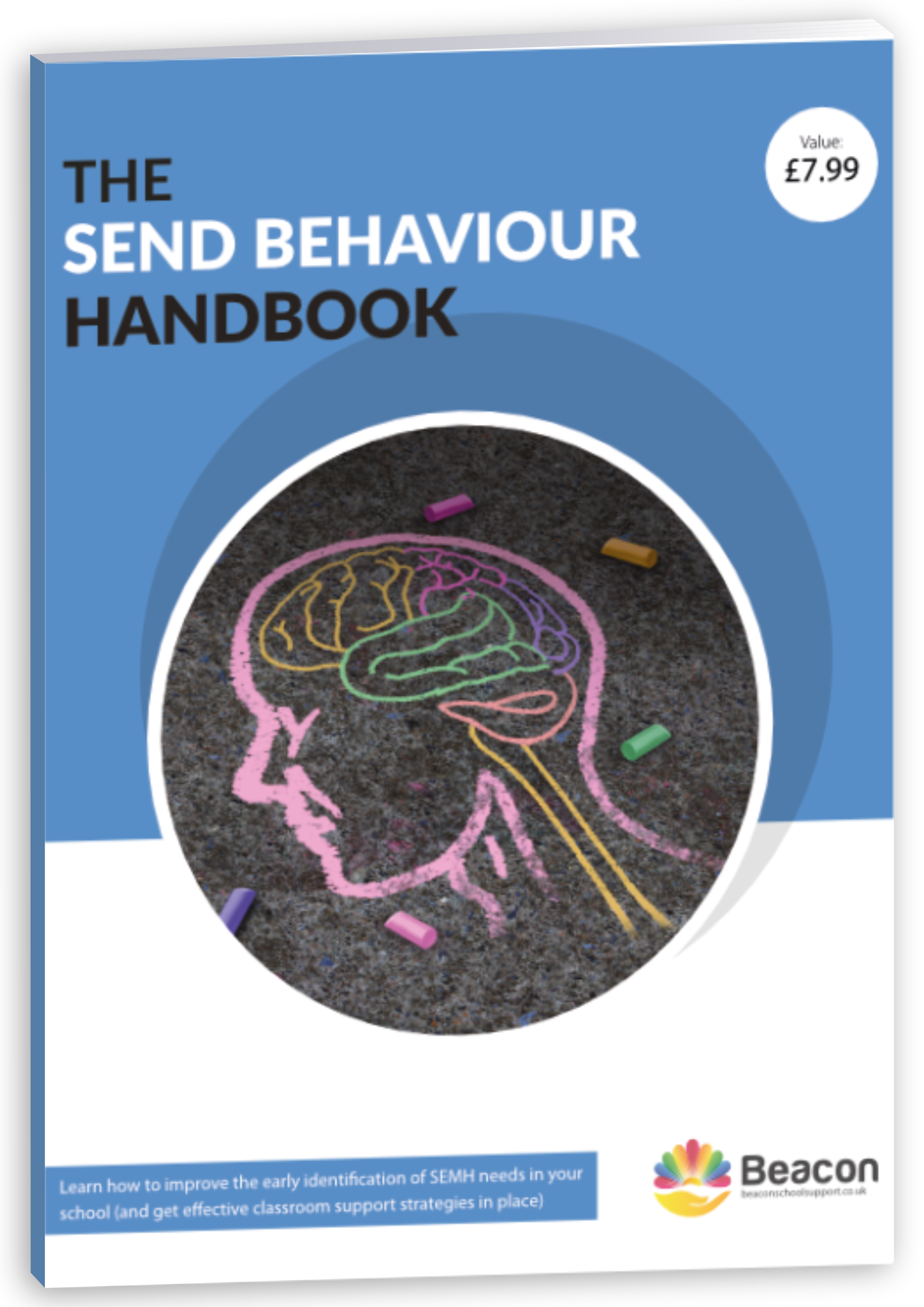
Get our FREE SEND Behaviour Handbook
Download other FREE behaviour and SEMH resources
Share this podcast with your friends:
Show notes / transcription
Simon Currigan
If you're a SENCO or a school leader working closely with one, and it feels like your response to SEND isn't as effective as you'd like it to be, no matter how hard people are trying, then this episode is for you. Because today I'm going to explain why the SENCO role has, over the last five, six, seven years, become impossible in otherwise caring schools, and why this isn't down to poor practice, lack of commitment, or people not doing enough. And I'm not talking about this from a position of theory or scanning social media headlines; I'm talking from nearly two decades of experience working inside real schools alongside SENCOs and leadership teams who care deeply about inclusion but are drowning in paperwork and firefighting.
That's why in this episode I'm going to walk you through how and why the SENCO bottleneck actually forms, why increasing people need should be changing the SENCO's role, and how mission creeping that role over time has accidentally created a single point of failure in schools around SEND. Most importantly, you're going to leave with a clear way of rethinking your SENCO's role so it becomes about building capacity across your school and not a single person absorbing all of the SEND pressure until they burn out or walk away from teaching completely.
So if you want SEND support that's sustainable, consistent, and that actually works for the teachers and pupils in your classroom, stay with me. This episode is going to help you see the problem, watch changing and your next steps much more clearly.
Hi there, welcome to School Behaviour Secrets. My name's Simon Currigan, and I've just started writing my memoirs. Well, sort of, a couple of issues. I got two pages into chapter one, and then that was it really. I ran out of interesting material. And then ironically, I sent that to my editor, and she told me to stop padding it out, which felt like adding insult to injury. So I'm putting that project on the back burner.
Anyway, this is School Behaviour Secrets, and today we're talking about something far more interesting than my life story, the SENCO bottleneck, and why the SENCO job has become impossible in otherwise caring schools. I'm not only going to look at why this is a problem, but also what we can do about it for the good of everyone in school, the kids, the staff, and that SENCOs, who, by the way, do an amazing job under difficult circumstances. So this isn't a criticism of them, and it's not a moan. It's a constructive look at the role in schools and how we can help our SENCOs without burning them out. But before we go any further, I've got a quick ask to make. If you find this episode useful, please take a moment to like, subscribe, or leave a review wherever you're listening. It helps other school leaders and teachers find the podcast, and it genuinely makes a difference.
And if you know a SENCO or a school leader, or you have another colleague who would find this episode helpful, then make sure you hit the share button and share it with them. And of course, that could also be by sharing it in the staff room or by clicking the share button and using social media, whatever works for you. Right, let's get into it. I want you to picture, before we get too far into this, a SENCO starting a new role.
I'm going to call her Jenny. She's not new to teaching. She's respected. She cares deeply about inclusion, and she's partway through her mandatory SENCO MPQ training. She steps into the role expecting the job to be about coordinating provision, supporting staff, improving outcomes for pupils with SEND, and gradually building systems that make things work better over time. And none of that expectation is unreasonable, but very quickly reality hits. So her inbox never empties.
Parents want meetings urgently. Teachers need immediate advice. Or for her to personally deal with a child whose emotions have spiraled and is currently throwing books around in the corridor. EHCP paperwork starts to dominate her diary. Safeguarding concerns land on her desk because everything's related to SEND nowadays, so someone thinks that she should be involved. And Jenny's in this role, and she can feel the water rising up to her neck already. She feels out of depth.
So why is that? Why is this the experience of so many SENCOs today? Well, much of the SENCO training that SENCOs receive is academically solid. It covers things like legislation, theory, frameworks, statutory duties. What it rarely does, what it rarely prepares people for, is the volume of work, the pace of the work, the politics, and the emotional pressure that SENCOs come under. The real SENCO job involves building relationships with parents, teachers, and outside agencies using soft power and soft skills and doing all this in time-pressured ways that are very hard to simulate on a training course. And that gap alone goes some way to explain why capable, committed SENCOs can feel overwhelmed within months of starting the job.
Why they're asking, "What have I got myself into?" and being asked to write essays on their school's thematic approach to inclusion. Well, that's not going to help them do the day-to-day job. It's like asking a sailor on the Titanic to complete a thesis on structural engineering when what they're saying is, "We've just hit an iceberg. How do we get the water out of the hULL?" So we really need to think about how we train our SENCOs for success. And yes, I know the way SENCOs are being trained has been recently updated, but I'm still talking to SENCOs who are new to the job, expressing the same difficulties, the same problems, the same frustrations with the training as SENCOs did 10 years ago.
And by the way, before I go any further, if you are working with kids who are demonstrating challenging behaviour in the classroom and you're not sure why they're acting that way and you want to be able to help them, you want to set off on the right foot, well, we've got a download that can help you understand their behaviour and put in place a needs-led response. It's called the SEND Behaviour Handbook, and it will help you link the behaviours that you're seeing in your classrooms with possible underlying causes like autism and ADHD. The idea here isn't for teachers or SENCOs to make a diagnosis. We're not qualified to do that as educational professionals. But if we can link those behaviours to possible underlying causes quickly, it means we can get the right help and get the right early intervention strategies in place. It's a completely free download. Go to our website, beaconschoolsupport.co.uk, click on the free resources tab, and you'll see the SEND Behaviour Handbook at the top of the page.
And I'll also put a direct link to that guide in the episode description so you can tap directly through in your podcast app. Okay, so now let's talk more about those issues, about what's creating pressures for SENCOs and why they're becoming bottlenecks in the system. We've talked about training, but now let's layer on what's been happening in schools over the last few years.
Kids have become more complex. So what I mean by that is this: it's not often nowadays that you see a child present one discreet, simple need. Now, more often, the students we're working with present multi-layered needs. So you might have SEMH needs, other SEND needs around learning. You've got behaviour, attendance, mental health, family stress. All these factors overlap and blur in real life. And that's messy.
It's not like it is in the textbooks, and it takes time and expertise to unpick. This is often a problem for secondary schools, especially because of the way they set up their teams. And this is a mystery to me to this day. SEND and pastoral teams often are completely different teams that run alongside each other rather than fully integrated together, often supporting the same child but working in silos. Or you have a child with complex needs, say, and it's just not clear to which team that child belongs to, when really the SEND team and the pastoral team are the same team. That separation means information doesn't always flow cleanly to the people who need it, and the ownership of the child isn't always clear. So when a pupil starts to have emotional issues or attendance issues or their behaviour spikes, the lines of responsibility aren't clear.
We're not taking a holistic view of the child. And then what happens is you get people pulling in different directions, and the support the student gets isn't coherent. So what happens when a leader notices that's happening in their school or a parent complains? What happens then? Well, the pressure drifts back to the SENCO to sort it all out. Not because the other professionals are being lazy or dodging responsibility, not because they don't care. But over time, the SENCO has become the point where everything kind of just like converges in one place. And then figuring out what needs to be done, what assessments are required, what professionals need to be involved, what plans need to be written, that becomes the SENCO's job, and that all takes time, adding to the bottleneck.
Then there's the layer that comes from the local authority contributing to this. And yes, everyone knows the SEND and the EHCP system is in a shocking state. Even the MPs admit it. Everyone knows there isn't enough money. This is not news. Even the mainstream media are finally talking about this more often. But that's led to, and let's be honest, questionable tactics by local authorities who, for legal reasons, when they get an EHCP application, but the cupboard is bare, can't use the words, "This child does have clear needs, but we don't have the money to help them," which at least would be honest. But those legal constraints mean that when Jenny submits her EHCP request for her child, it's well evidenced. It gets knocked back as not meeting the threshold, or the authorities say that it requires even more reports and evidence. Or, you know, maybe she used the wrong font size in a box on page 86 because the requests are so long now she has to stay up until midnight to complete them, and her eyes couldn't focus anymore as she worked on it. So Jenny goes away, gathers more evidence, rewrites reports, resubmits paperwork, attends more meetings, waits, explains, reassures the parents who feel that she's let them down. She has to manage all that disappointment and anger, and it goes on and on and on.
So this isn't about schools or SENCOs being inefficient or not up to the job. What we're seeing here is a bottleneck that's the result of government policy and local authorities being bankrupt and pushing those pressures down into schools. And forget the time cost and the emotional stress. They're very, very real, but this has a financial cost to the school because, and we don't think about it in these terms very often, but it's true, the school are paying Jenny's salary, meaning that there is an hourly cost to the work that she does. So if you add up all of Jenny's hours working on the original EHCP application and then the reapplications and all the political work and the soft skills work with the parents and bringing in more experts, that adds up on an hourly rate to a lot of money. So now, as a result of government policy and local authority pushback, we now have a financial bottleneck for the school, not just a time or a support bottleneck, and that's being imposed on the school by the system.
So at this point, some schools try to do the right thing by building a SEND team around Jenny to support her and on paper. Brilliant, right? That should reduce her pressure. But in practice, what often happens is the team isn't properly trained, and the opposite of a reduction in pressure happens. You get an increase in pressure because when the team don't have the right training or the experience or the background to support with the roles of things like completing observations or writing up meetings or helping with support plans or implementing support groups of pupils, suddenly, every time that member of staff who's been pushed into a new role that they don't feel capable or certain about and they experience doubt, what happens is they escalate those doubts and problems to the SENCO again. Every decision then gets checked. Every tricky conversation with a teacher or a parent gets passed back up to Jenny. Things like, "Can you just look at how I've written this IEP? Can you sit in on this meeting? Can you speak to this parent for me? Can you advise on what should go into this behaviour plan?" And now Jenny, who has a stack of her own work and own problems, is acting as a constant problem solver and support person instead of running the team and the system. She's getting pulled back down into the details so she can never get her head above water.
And when that person finally does get the training and experience they need to do the job well without having to constantly refer to the SENCO, what happens? They often move to another role that's better paid in another school, or the opposite happens. They don't get the skills, and they don't feel like they can succeed, and they don't get the right experiences, and then they leave the school because of the pressure, and the game starts again, and we get an influx of new members of staff who need the same kind of training and support, and that leaves Jenny stuck.
There's an element to the SENCO job as well that I've already touched on that I think is underplayed that we need to look at, and that's how political the role becomes and why that creates a bottleneck. Managing parent relationships takes time and good interpersonal skills and good social instincts. Listening and reassuring, explaining processes, setting expectations, building trust, all of that work is actually really quite slow, and it's emotionally draining, and you can't rush it without consequences. Sometimes you need to work with parents and take them with you on a journey, and you can't move faster than they can move. And often that political work also needs to be done with teachers too, winning them over to an inclusive point of view or supporting them with their doubts and fears and worries about supporting a child in class and the stress that comes with that or overcoming the resistance to new ideas and strategies.
And when the numbers of children with special educational needs and disabilities rises, all of that invisible work that goes on in the background, the quantity of it kind of explodes. And that's before we get to things like planning or monitoring provision in classrooms or coaching staff or reviewing what's happening in classrooms, preventative work. Plus, when we have more students with complex needs in school who require a joined-up approach and schools that don't have the resources to meet those needs, what happens is you see more dysregulated pupils in class because they aren't getting the support and the strategies they need. And who gets called on to help then? Jenny, which pulls her away from the important strategic long-term work of getting the resources that are needed to support the children in class, you know, in this killer blow of irony, which leads to increasing amounts of dysregulation in school because now there's fewer resources to support those children. And around and around we go until firefighting becomes the default. Jenny can never focus on the important long-term stuff. Short-term needs mean that Jenny can never do the work of gaining the resources the school needs in the long term to escape the cycle.
We're currently writing a book about all of this, by the way, which looks into both why kids get dysregulated at a biological level, but it's not just going to focus on things like de-escalation strategies. It's going to focus on systems too, how leaders can build a joined-up system in school that keeps kids regulated in the first place. That's going to be published by Routledge. We've just signed a book deal, which is exciting. So I'll keep you posted on how that's going in the future. It'll be a way off yet, hopefully in 2026, though.
Okay, back to SENCOing and bottlenecks. There's another effect here that's easy to miss. As classrooms become more complex, teachers start to doubt their own judgment. A pupil becomes heightened. Strategies don't work immediately, so their confidence starts to wobble and shake. So teachers then either defer judgment to the SENCO and ask for a meeting, or they quietly disengage from behaviour plans and support plans that they don't feel confident implementing. Neither of those outcomes are desirable, but from a human point of view, from a psychological point of view, they're both understandable. But both outcomes increase demand on the SENCO, and guess what? They make the bottleneck work.
And I'm just getting started, but you can see how the bottleneck forms from all of these individual factors, all small by themselves. And this isn't because Jenny isn't good enough. It's not because Jenny doesn't care, but because the system, the way we work in schools, unintentionally turned her into this single point of failure. So let me come back to Jenny's journey, starting out as a SENCO, to see what that looks like for her in concrete terms. So she's done the job. We're about halfway through the year, and she has this plan to block out some time to plan provision properly, to think long term, to step back and be strategic. So she blocks the morning off, but guess what? By half past nine, a crisis lands on her desk. There's a knock at the door because Jayden in year six is out of class again. So she goes to support with Jayden. Then she comes back to her office and the phone rings because a parent is upset and they want to speak to her right now and it will not wait. So she deals with that parent. She goes back to her strategic planning, but then there's another knock on the door. Can you come into a safeguarding meeting, please, because you know some important information about a pupil and the social worker's here?
By the end of the day, Jenny realizes she never got to do the big, important, big picture thing that would have helped five, six, seven, eight, nine, ten pupils because she was forced to spend the day reacting to mini crises. And that's often the moment when SENCO start questioning themselves, their capacity to do the job, to lead, whether they're succeeding or letting kids down, whether they're a good SENCO or not. And then we get the risk over time that Jenny gets disenchanted or burns out. So she starts looking for another job or goes off with stress or leaves the profession because the job is just not doable. Even though, and this is the killer right, she's not the real problem. The structure of how we deal with SEND in schools today is. And I'm not blaming schools for this. This is complex. It's about how we set up SENCOs for success or failure across the whole of education. It's not about one individual school or one multi-academy trust. It's because the way we work now is based on a system that was designed for a different time, when pupil needs were simpler, when there were fewer pupils with needs, when parents' and families' needs were simpler.
So while I'm saying the SENCO is the bottleneck, what I'm really saying is, do we have a system that can cope today with the level of demand that we're seeing? Because the SENCO can't be the system anymore in a world where complex needs are skyrocketing. We need our SENCOs to build and lead the system, not to do every little thing themselves, not to get stuck in the weeds. The most effective SENCOs aren't the ones who will hold on to all the knowledge and make all the decisions. They're the ones who are going to be able to distribute understanding, confidence, and build consistency across the school. And that requires senior leaders to own SeMH and SEND strategically, not delegate it downwards to SENCOs and SENCO teams and hope goodwill fills the gaps, which does, I know, involve some really creative thinking here, potentially on how schools work together in groups to create teams, how they build capacity in classrooms, how we train and manage those support teams to create long-term stability, what support for students and inclusion actually looks like, how schools work with the local authority, how we and the government and the local authority share realistic expectations of what's possible and what parents should expect given limited budgets and high numbers of need.
Because the days of a school having a handful of kids that needed support from the SENCO who could pop into class on a Wednesday morning when she had some release time to do a quick observation and fill out a referral form, they are over.
And all right, it's related, but I'm going to go off on a tangent for the moment in terms of where the solutions might lie, but in terms of workload and report filling, which is often a massive part of SENCO's role. Obviously, potentially there's a role for AI here to support with all the administrative side of things. And I mean here AI that's managed by the school and that's used as a support tool, not that AI takes over human judgment that everyone suddenly acts as a slave to.
Filling out referrals and EHCP requests, right? They take ages. We surely must be reaching the point now where Jenny can go to an AI system and say, "Here's the body of evidence I've collected. In our system, we have documents with observations and notes from external professionals and teacher comments and parental comments and so on. Take this system and wrangle the information into a referral form for me or an EHCP application." And while doing that, preferably still respect everyone's privacy, like don't share this on X for the whole world to see, not mentioning any grok AIs by name.
This has to be doable, right? Because given the SENCO's workload, support and direction is what I think of as high-value work, the coaching of the teachers and the work with the parents, and filling out forms is admin. In the SENCO's role, that's a lower-value area of work. And we want Jenny doing this stuff that's high-value, right? Not stuck filling out forms all day.
All right, tangent over. So all that in total, in my opinion, is why the SENCO acts as a bottleneck and why I don't mean that as a criticism to SENCOs like Jenny. This is actually a love letter to SENCOs and why we need to think about their role in the profession moving forward and what that will look like given the changing landscape or Jenny and thousands like her will be leaving the role in their droves in the next 10 years, especially as we've been told the future isn't more special schools, it's inclusive mainstream.
Quick reminder at this point, if this episode is resonating, please like, subscribe, or leave a review or share it with other SENCOs you know so it helps more people in similar roles find this conversation and add thoughts of their own.
Okay, before we're done, I want to leave you with one diagnostic question that will help you understand whether this applies to your school and how it applies for your school. I want you to ask yourself, if your SENCO was off for six weeks, would support in your school for SEND fall apart, or is there a system in place that could continue without them? If it would fall apart, the problem isn't your SENCO. It isn't Jenny. It's the lack of structure and the lack of systems around her supporting her job.
My name's Simon Currigan. Thank you for listening today, and I can't wait to see you on the next episode of School Behaviour Secrets. I hope you have a brilliant week.
(This automated transcript may not be 100% accurate.)